High-Yield Savings Accounts Explained: How to Choose the Best One
What a high-yield savings account is, how much more you can earn, whether it's safe and what to check before you open one.
How much to keep in your emergency fund, where to keep it and 9 realistic ways to save it even on a small paycheck — with real dollar examples.
A flat tire, a trip to urgent care, a week without work… Surprises happen to everyone. The difference is that without savings, they end up on a credit card or an expensive loan — and one bad week turns into months of debt.
An emergency fund is money set aside only for those moments. And you don’t need a big income to start one. You need a plan.
The most common guideline is 3 to 6 months of essential expenses. Note: expenses, not income. Count only what you can’t live without:
Example: if your essential expenses add up to $2,000 a month, your final goal would be $6,000 to $12,000.
Sounds impossible? That’s normal — which is why it helps to break it into stages:
| Stage | Goal | What it does for you |
|---|---|---|
| 1. Starter | $500 – $1,000 | Covers small surprises without a credit card |
| 2. One month | 1 month of essential expenses | Gets you through a short rough patch |
| 3. Full cushion | 3–6 months of expenses | Protects you from a job loss or a major emergency |
Aim for 6 months or more if your income is irregular (self-employed, tips or seasonal work) or if you’re the only earner in your household.
| You save | After 1 year | To reach $1,000 |
|---|---|---|
| $10 a week | $520 | ~2 years |
| $25 a week | $1,300 | ~9 months |
| $50 a week | $2,600 | ~5 months |
| $100 a week | $5,200 | ~10 weeks |
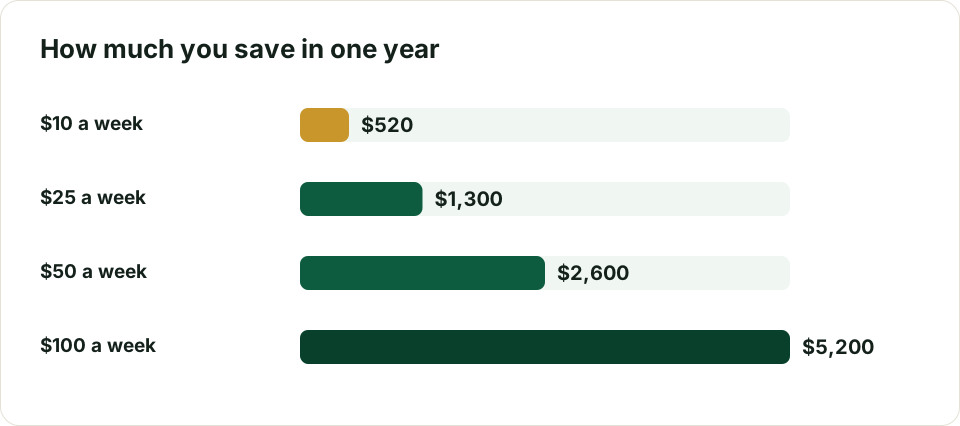
What matters isn’t the amount — it’s consistency. $25 a week doesn’t sound like much, but after a year it’s $1,300 you didn’t have before.
Your fund should be safe, available within a day or two and separate from your everyday account so you don’t spend it without noticing.
Do both, in this order:
Without a starter fund, any surprise puts you right back on the card you were paying off.
Before you withdraw, ask: is it unexpected, necessary and urgent?
And if you use it, don’t feel bad — that’s what it’s for. Just rebuild it little by little.
Is an emergency fund the same as savings? Not exactly. An emergency fund is savings with one job: protecting you from surprises. For goals like a trip or a car, use a separate account or savings “bucket.”
Should I invest my emergency fund so it grows? No. Its job is to be available and stable, not to grow. A high-yield savings account earns some interest without putting the money at risk.
What if I can’t even save $5? Then the first step is to increase income or cut one big expense (housing, transportation or debt). Getting help from community programs for basic needs can also free up money to get started.
This article is for educational purposes only and is not personalized financial advice. Interest rates and deposit insurance limits can change; confirm them with your bank. Read our Disclaimer.
What a high-yield savings account is, how much more you can earn, whether it's safe and what to check before you open one.
Real side hustle ideas to earn extra money in your spare time — including options for bilingual people — plus how side income is taxed and how to spot scams.