Online Job Scams: 10 Red Flags and How to Tell If a Job Is Real
How to tell if an online job is a scam: 10 red flags, the most common work-from-home scams (task scams, fake checks, reshipping) and what to do if you already paid.
Everything to start saving in one place: budgeting, an emergency fund, where to keep your money so it earns interest and how to earn extra income.
Quick answer: saving is about having a system: make a simple budget, automate your savings, build an emergency fund and keep it in an insured account that pays good interest. Then look for the biggest ways to spend less or earn more.
Saving isn’t just about how much you earn — it’s about having a system. This guide brings together, in order, everything you need to start saving in the U.S. even on a tight paycheck, with links to our detailed guides. Acronyms like FDIC or APY are explained in our glossary.
| Step | What you do | Guide |
|---|---|---|
| 1 | Have a bank account | Open an account without an SSN |
| 2 | Make a budget | 50/30/20 budget |
| 3 | Build your emergency fund | Emergency fund on a small income |
| 4 | Keep savings where they earn interest | High-yield savings accounts |
| 5 | Increase your income | Legit side hustles |
Without a bank account you pay check-cashing fees and saving is harder. Many banks and credit unions open accounts with a passport, ITIN or consular ID.
👉 How to open a U.S. bank account without an SSN
The 50/30/20 rule splits your take-home pay into needs (50%), wants (30%) and savings and debt (20%). If that doesn’t work yet, start with 10% savings and raise it gradually.
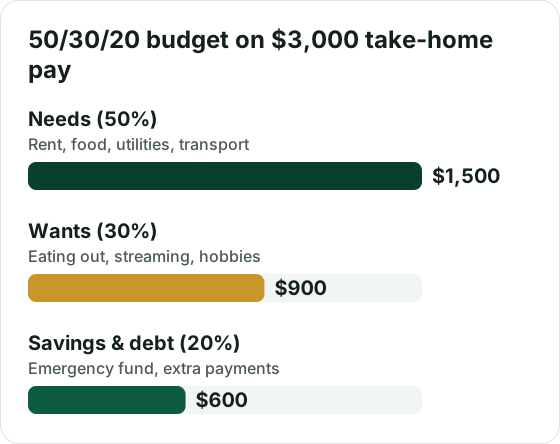
👉 The 50/30/20 budget with real examples
It’s money just for surprises: a car repair, a doctor’s visit, a week without work. Start with a goal of $500 to $1,000 and grow it to 3–6 months of essential expenses.
The trick that works best: automate a transfer to savings on payday.
👉 How to build an emergency fund on a small income
Don’t leave your savings in an account that pays almost nothing:
If you have high-interest debt, follow this order:
👉 The complete guide to loans and debt
How much should I have saved? To start, $500–$1,000 as a starter emergency fund. Long term, 3 to 6 months of essential expenses — more if your income is irregular.
Where should I keep my savings? In an insured (FDIC or NCUA) high-yield savings account, separate from your everyday account. Not as cash at home or in risky investments.
Is it worth saving if I earn little? Yes. Even $10 a week is $520 a year that can keep a surprise from becoming expensive debt.
This guide is for educational purposes only and is not personalized financial advice. Read our Disclaimer.
Links open the official websites. Rules change: always check the latest information there.
How to tell if an online job is a scam: 10 red flags, the most common work-from-home scams (task scams, fake checks, reshipping) and what to do if you already paid.
What documents you need to open a U.S. bank account without an SSN (passport, ITIN, consular ID), where to open one and how to avoid fees.
The differences between a high-yield savings account, a certificate of deposit (CD), a money market account and a money market fund — and which fits each goal.